Automatic Bulk Bottle Unscrambler | B-feed-R
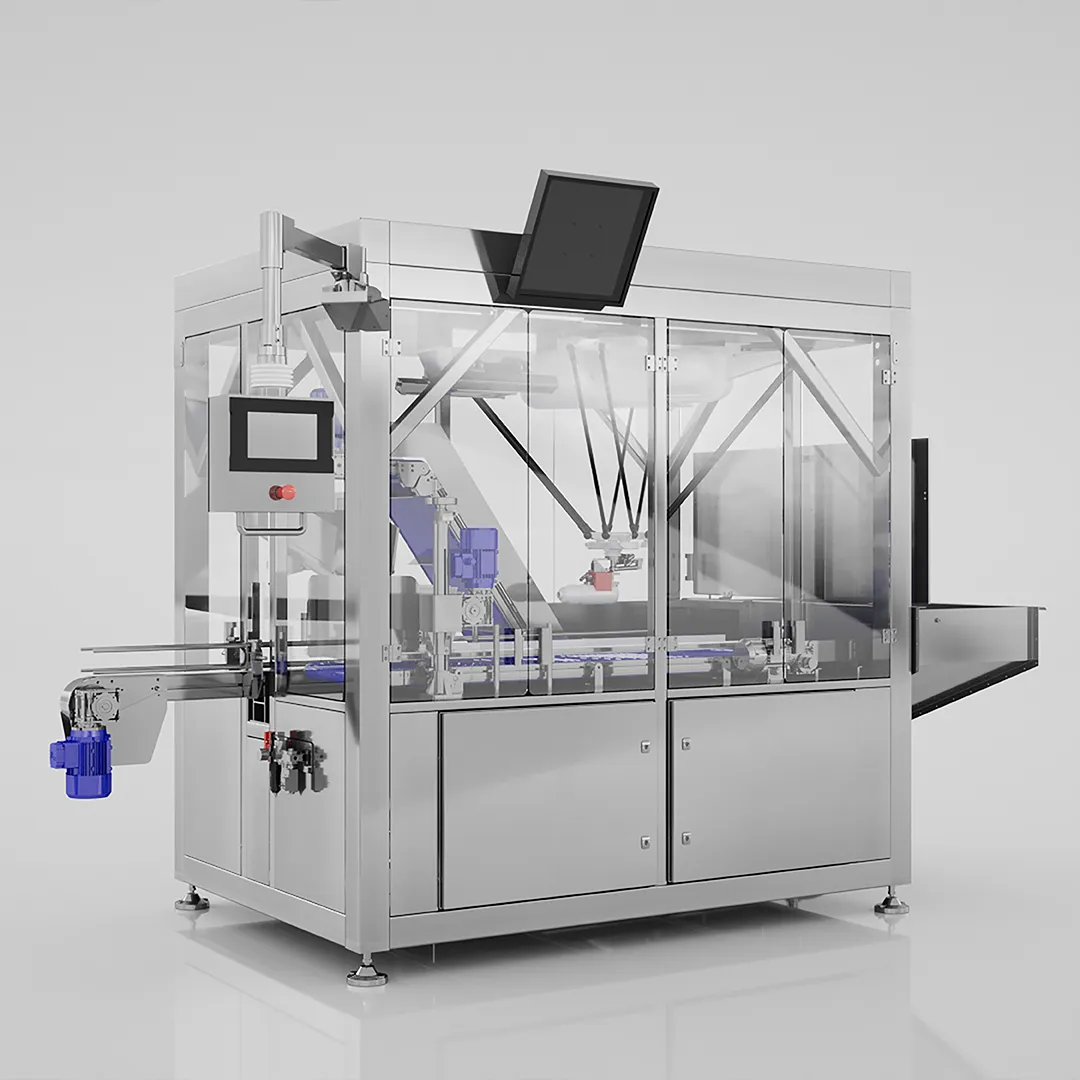
Robotic feeding module that separates, vision-locates and uprights bottles delivered in bulk, then loads them continuously onto a conveyor or into pucks.
Who is it for?
B-Feed-R is aimed at manufacturers — from SMEs to large groups — whose bottles arrive in bulk and must be oriented one by one before filling. It replaces a manual feeding station, often physically demanding and prone to turnover, at the head of an existing line or as part of a new installation, in cosmetics, perfumery, pharmaceuticals, chemicals and food.
How does B-Feed-R work?
The hopper sits within the module ground footprint, which avoids reserving extra floor space at the head of the line. Bottle separation and orientation run in 5 steps:
- Bulk container loading into a high-autonomy hopper
- Bottle separation by elevator belt
- Vision location — the coordinates of each container are sent to the robot
- Automatic uprighting of the containers by the robot
- Loading onto a conveyor or into pucks to feed the next station
- High-autonomy hopper built into the module ground footprint
- Machine-vision location: no per-format guiding tooling
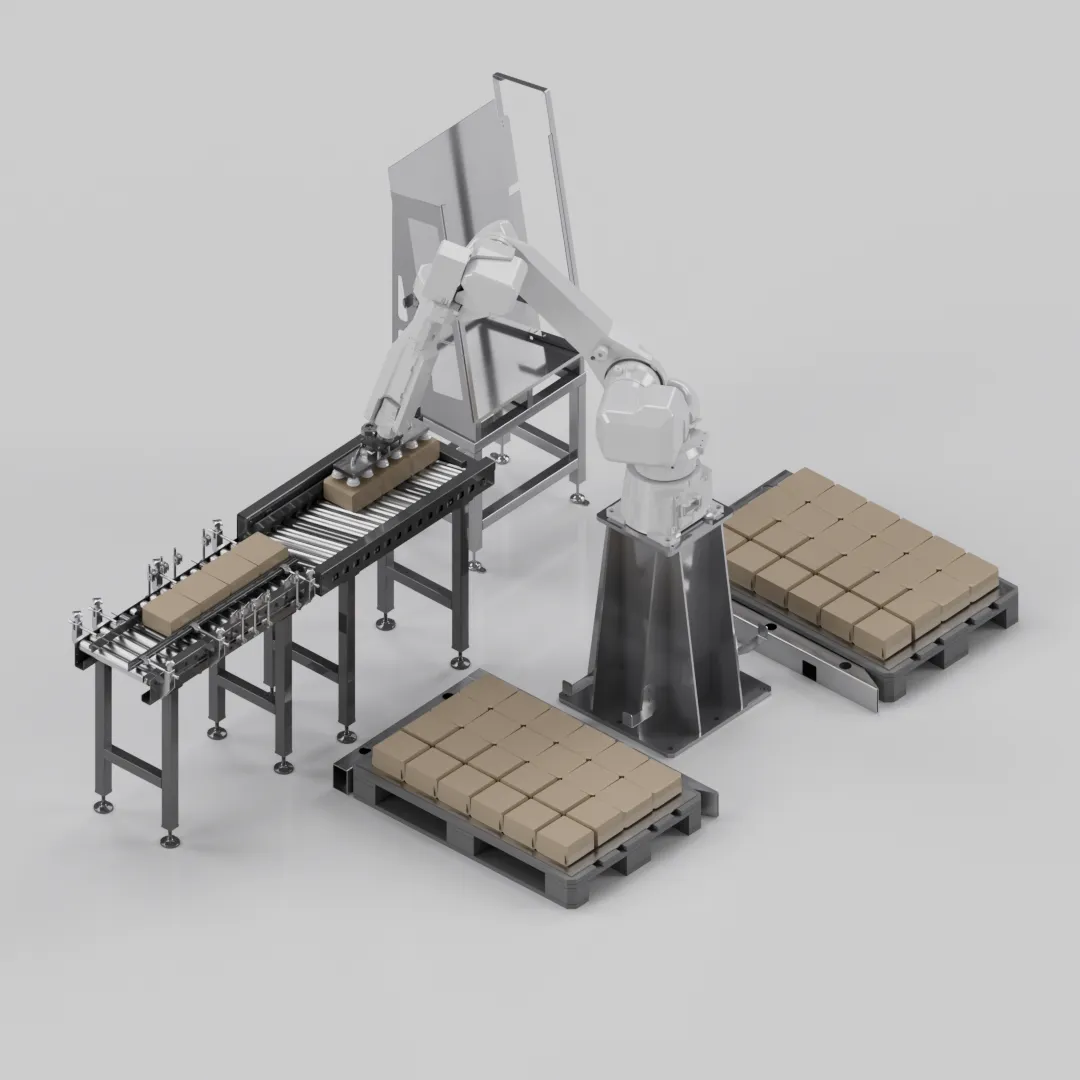
- Uprighting and loading by industrial robot, onto conveyor or into pucks
- Handles glass, HDPE and PP, including large formats
- Fast format changeover with no dedicated tooling
- Removes one manual feeding station at the head of the line
- Simple mechanical architecture, standard components, remote support
- Designed and manufactured in France, IQ/OQ file delivered
Discover our solution in video
Technical specifications
- Container materials
- glass, HDPE, PP
- Pick-and-place technology
- industrial robot driven by machine vision
- Bulk feeding
- high-autonomy hopper + separating elevator belt
- Outfeed
- conveyor or puck
- Format changeover
- fast, with no dedicated tooling (vision recipe)
- Installation and commissioning
- about 26 weeks from order to commissioning, operator training included
Compliance
- Machinery Directive 2006/42/EC
- CE marking (Machinery, EMC, Low Voltage)
- ISO 22716 — Good Manufacturing Practices for Cosmetics
- Material and food-safety certificates (316L / 304)
- IQ/OQ qualification file delivered with the machine
- FAT/SAT documentation + "as-built" file
- Designed and manufactured in France
Typical use cases
- Cosmetics and perfumery: feeding an existing filler with complex-shaped bottles, with frequent run changes driven by collection turnover.
- Pharmaceuticals: feeding glass or HDPE bottles upstream of filling, with fewer human handling steps and a simpler GMP file to maintain.
- Chemicals: continuous feeding of large HDPE or PP containers on high-throughput lines with a broad reference portfolio.
- Food and beverage: automating the line-entry station during seasonal peaks (oils, sauces, condiments), whatever the delivered format.
- New complete line: standard entry block upstream of filling, capping and labelling.
Everything about this machine
B-Feed-R handles a wide variety of formats and materials — glass, HDPE, PP. Because location relies on machine vision rather than mechanical tooling, switching between formats is a recipe change, with no dedicated part to manufacture. An audit of your current containers is carried out beforehand to confirm compatibility prior to delivery.
The module slots in at the head of the line without major changes to the installation. Because the hopper is built into its ground footprint, the impact on production floor space stays limited. On the outfeed it can feed either an existing conveyor or a puck system.
B-Feed-R removes one manual feeding station, often physically demanding and a source of turnover. Observed payback is generally around 24 months, depending on throughput and the number of stations replaced. Fewer line stoppages and orientation errors also improve overall equipment effectiveness.
Allow around 26 weeks from order to on-site commissioning, depending on the level of customisation and the specifics of your containers. Installation, set-up and operator training are carried out on your premises.
No. The mechanical architecture is deliberately simple and the components are standard, therefore quickly available. Light preventive maintenance is enough in the vast majority of cases, and remote technical support helps reduce downtime should an incident occur.
Our expertise enables us to offer a complete solution.
From technical expertise of your installations to the design of your future production tools.



.svg?dpl=dpl_BzHV8N4HnaEsTkA5krnhfPJ92Gf7)