Dropper Bottle Packaging Line | FlexyFill
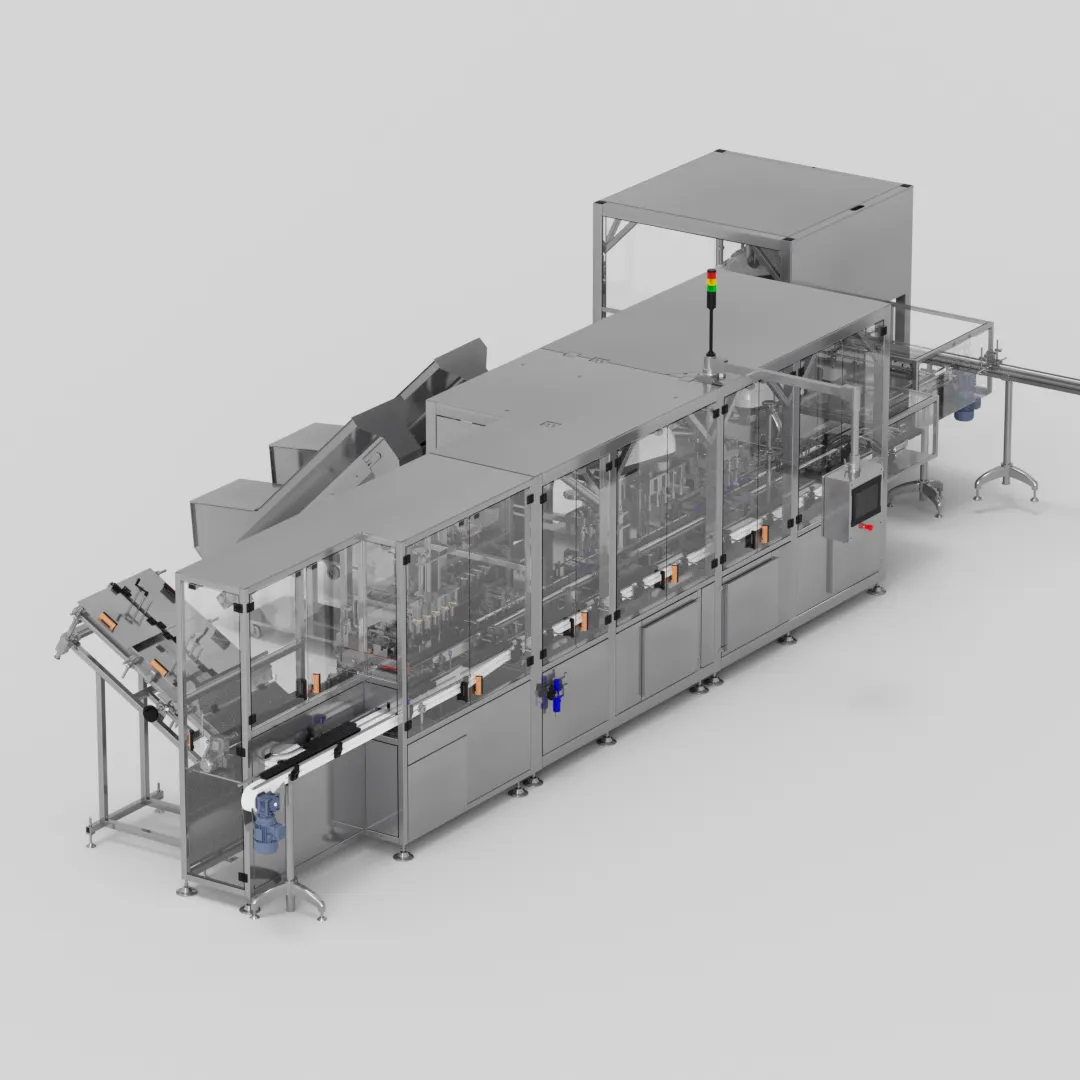
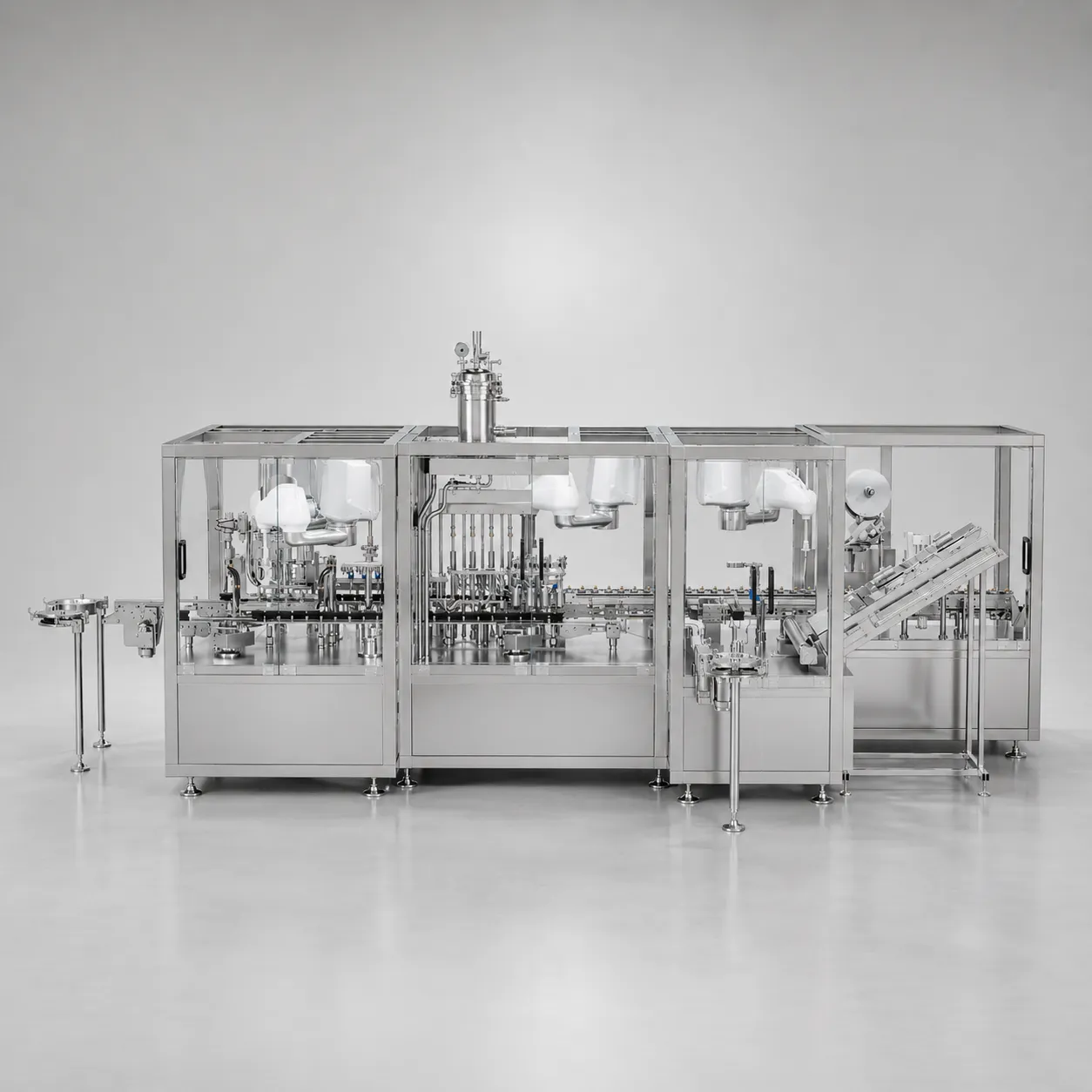
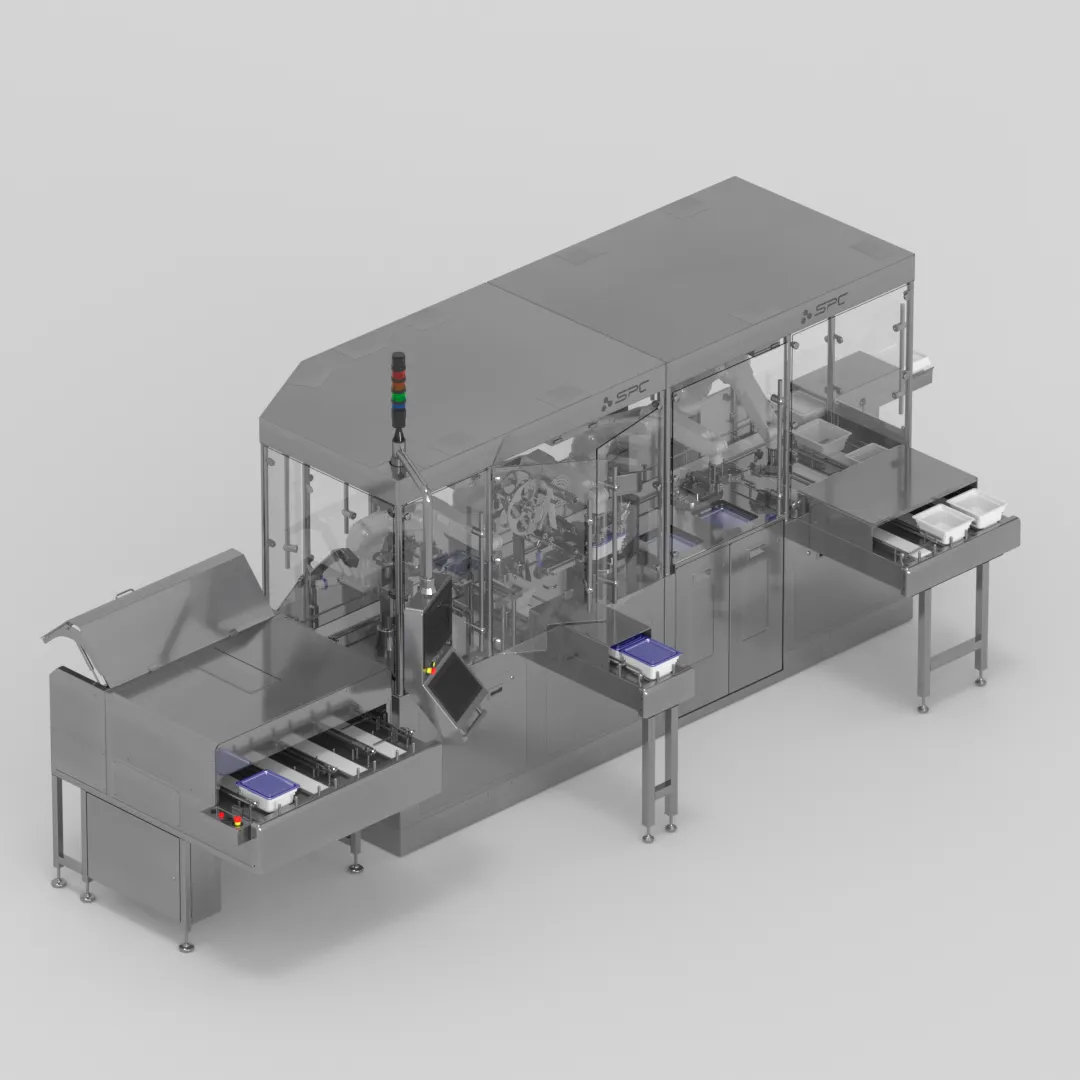
Complete configurable line for dropper bottles: filling, capping, labelling, identification and final inspection, with robotic conveying suited to aseptic use.
Who is it for?
Originally developed for dropper bottles delivered in bulk, this line is aimed at manufacturers in pharmaceuticals and healthcare, cosmetics and perfumery, food and fine chemicals. It packages water-like products as readily as gels, suspensions, creams or syrups, and is custom-designed around your production constraints — including running several formats on a single installation.
How does the line work?
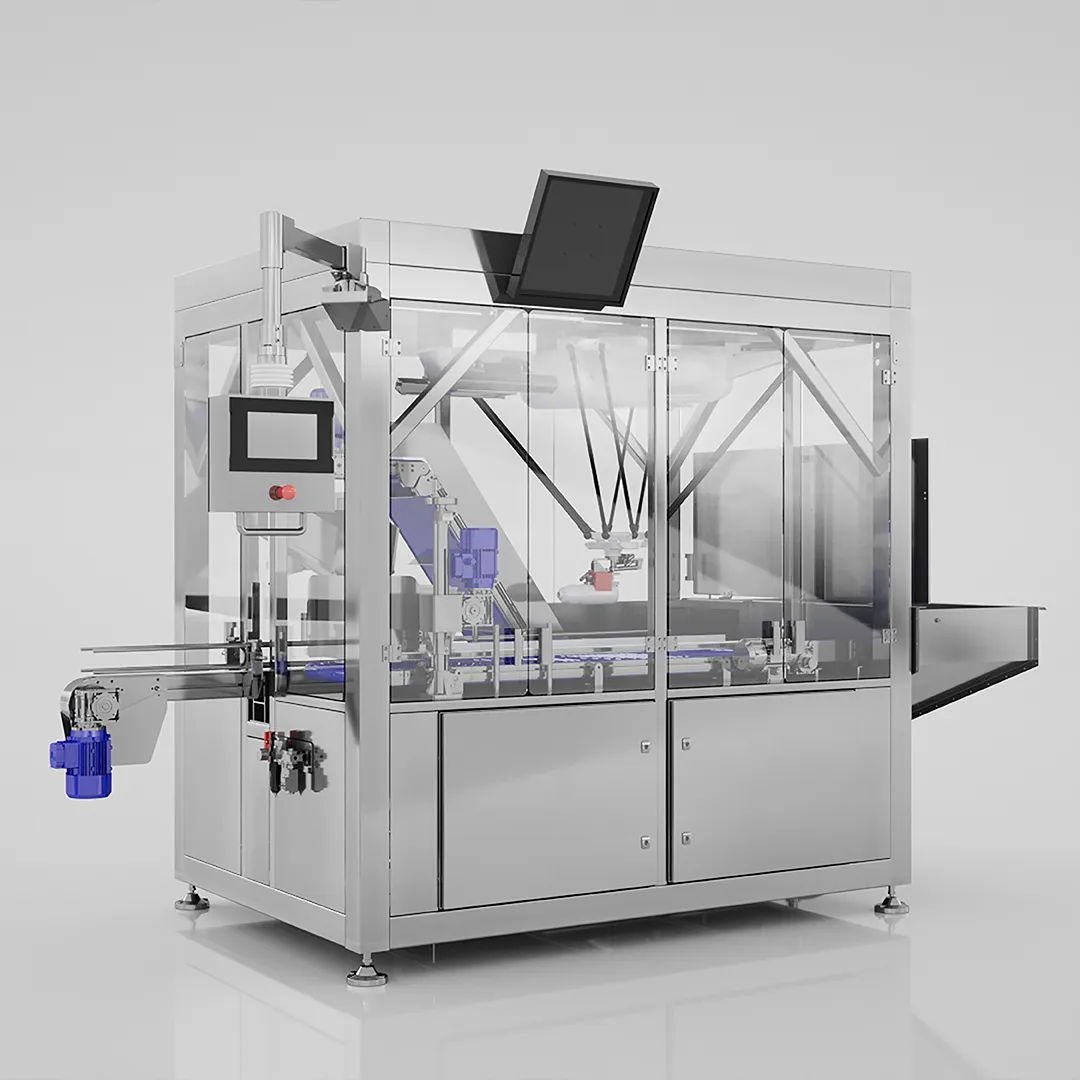
Conveying uses a walking-beam system combined with robots: throughput and reliability both improve, and human contact — therefore the risk of cross-contamination — is markedly reduced. Each station is configured to your product and container. The cycle runs in 5 steps:
- Container feeding, in nest or in bulk, manual or semi-automatic
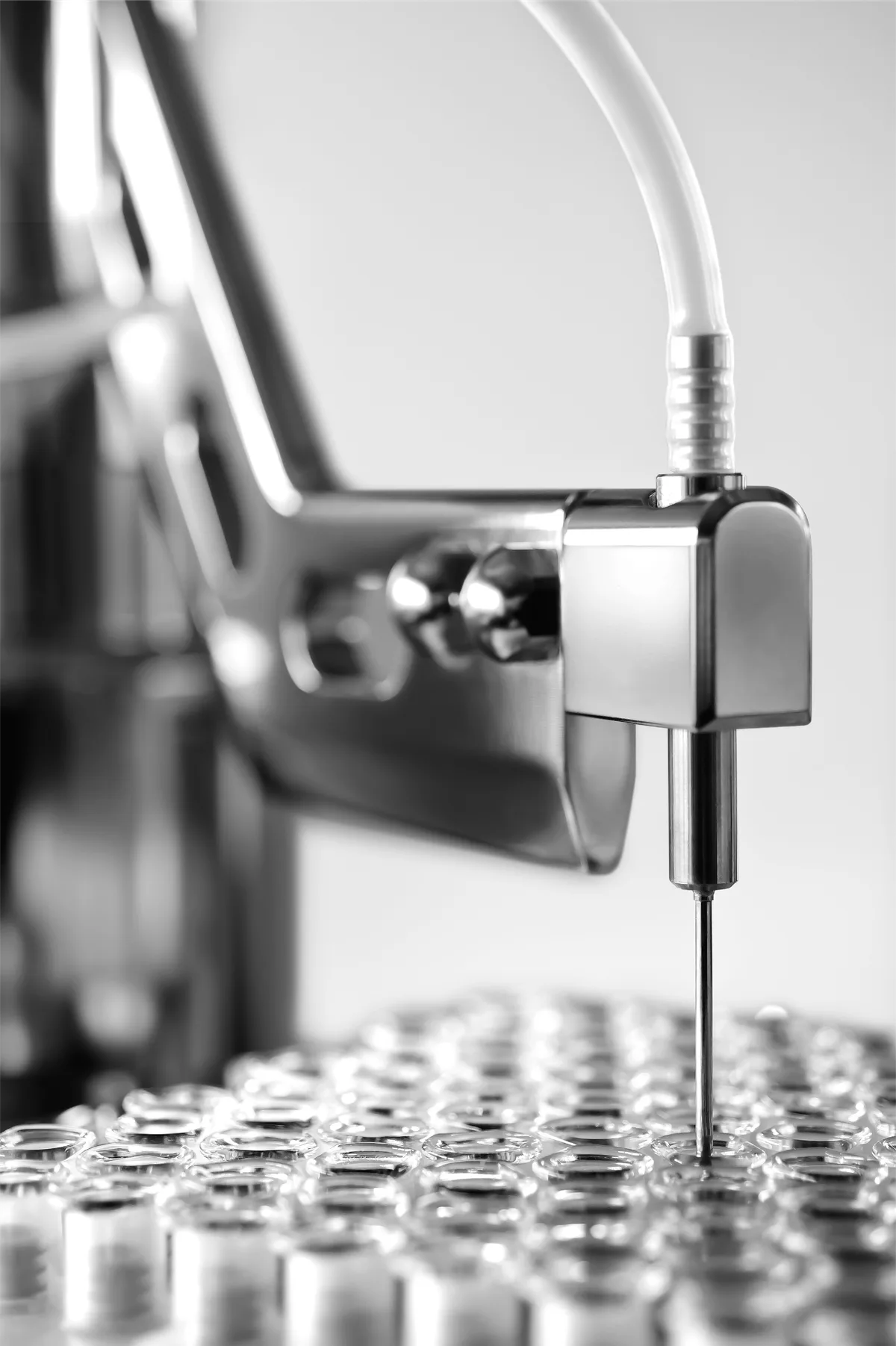
- Filling volumetric, peristaltic, gravimetric or flow-metered — in air, under vacuum or under inert gas
- Capping under vacuum or mechanical: screwing or crimping
- Labelling and identification — wrap-around or lick-and-stick, inkjet or laser marking
- Final conformity check by vision or by weighing, before the line outfeed
- Five functions on a single line: filling, capping, labelling, identification, final inspection
- Walking-beam conveying combined with robots: higher throughput and reliability
- Reduced human contact, therefore limited cross-contamination risk
- Design adaptable to the requirements of aseptic environments
- Multi-format: several container formats on one line, with fast changeover
- Four dosing technologies: volumetric, peristaltic, gravimetric, flow-metered
- Vacuum or inert-gas filling for products sensitive to oxidation
- Container feeding in nest or in bulk, manual or semi-automatic
Discover our solution in video
Technical specifications
- Handled containers
- dropper bottles, vials, jars, ampoules, syringes, cartridges, sprays, nest formats
- Handled products
- water-like products, gels, suspensions, creams, syrups
- Dosing technologies
- volumetric, peristaltic, gravimetric or flow-metered
- Filling atmosphere
- in air, under vacuum or under inert gas
- Capping
- vacuum or mechanical — screwing or crimping
- Labelling
- wrap-around or lick-and-stick
- Identification
- inkjet or laser marking
- Final inspection
- by vision or by weighing
- Conveying
- walking beam, robotic or mechanical
- Container feeding
- manual or semi-automatic, in nest or in bulk
- Format changeover
- fast — several formats run on the same line
- Environment
- design adaptable to aseptic requirements — ISO class defined at audit
Compliance
- Machinery Directive 2006/42/EC
- CE marking (Machinery, EMC, Low Voltage)
- Design compliant with GMP
- ISO 22716 — Good Manufacturing Practices for Cosmetics
- IQ/OQ qualification file delivered with the machine
- FAT/SAT documentation + "as-built" file
- Designed and manufactured in France
Typical use cases
- Pharmaceuticals and healthcare: dropper bottles of solutions and suspensions in aseptic environments, with final vision-based conformity checking.
- Cosmetics and perfumery: serums, oils and gels in dropper bottles, with several references packaged on the same line.
- Food and beverage: syrups and liquid flavourings, with batch and date marking applied directly inline.
- Fine chemicals: oxidation-sensitive products, filled under vacuum or inert gas then vacuum-capped.
- Multi-format sites: containers delivered in bulk or in nest handled on the same installation, with fast format changeover.
Everything about this machine
Yes, both. Container feeding is manual or semi-automatic, from containers delivered in nest or in bulk. The line was in fact originally developed for dropper bottles distributed in bulk, before being extended to other feeding modes.
Four technologies are available: volumetric, peristaltic, gravimetric and flow-metered. The choice depends on the nature of the product — water-like, gel, suspension, cream or syrup — and on the accuracy required. It is settled during the product audit, ahead of design, as the line is built to order.
Yes. Filling can take place in air, under vacuum or under inert gas, and capping itself can be performed under vacuum. That is the configuration chosen for oxidation-sensitive products, in fine chemicals as well as pharmaceuticals.
It is designed to meet aseptic environment requirements. Walking-beam conveying combined with robots limits human contact, and therefore the risk of cross-contamination. The target ISO class, airflows and cladding are settled during the integration audit, before manufacturing.
Yes. The line can be designed as a multi-format version, with fast changeover between runs. The formats actually handled are fixed during custom design: this must be framed from the audit onwards, as it drives the sizing of the stations.
Our expertise enables us to offer a complete solution.
From technical expertise of your installations to the design of your future production tools.

.svg?dpl=dpl_BzHV8N4HnaEsTkA5krnhfPJ92Gf7)