Semi-Automatic Filling and Capping Machine | RVE
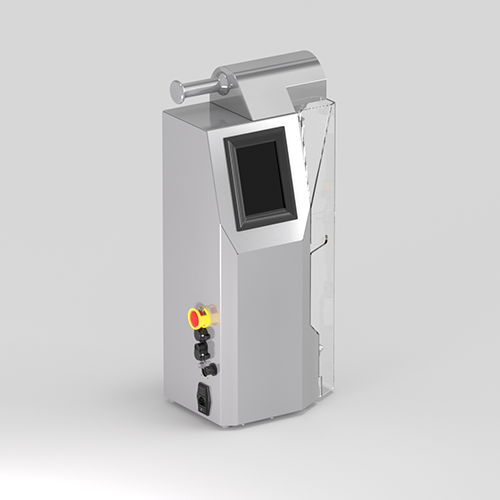
Compact filling and capping station for small and medium runs, with wrap-around labelling built in on the RVE2 version. Dosing accuracy under 1%.
Who is it for?
The RVE is the intermediate step between manual packaging and a fully automatic line: it lets a single operator supervise output that would otherwise take four or five people. It suits SMEs as much as R&D labs and new-product teams within large groups, in perfumery, cosmetics, pharmaceuticals, chemicals and food, for water-based, alcohol-based or viscous liquid products in small and medium runs.
How does the RVE work?
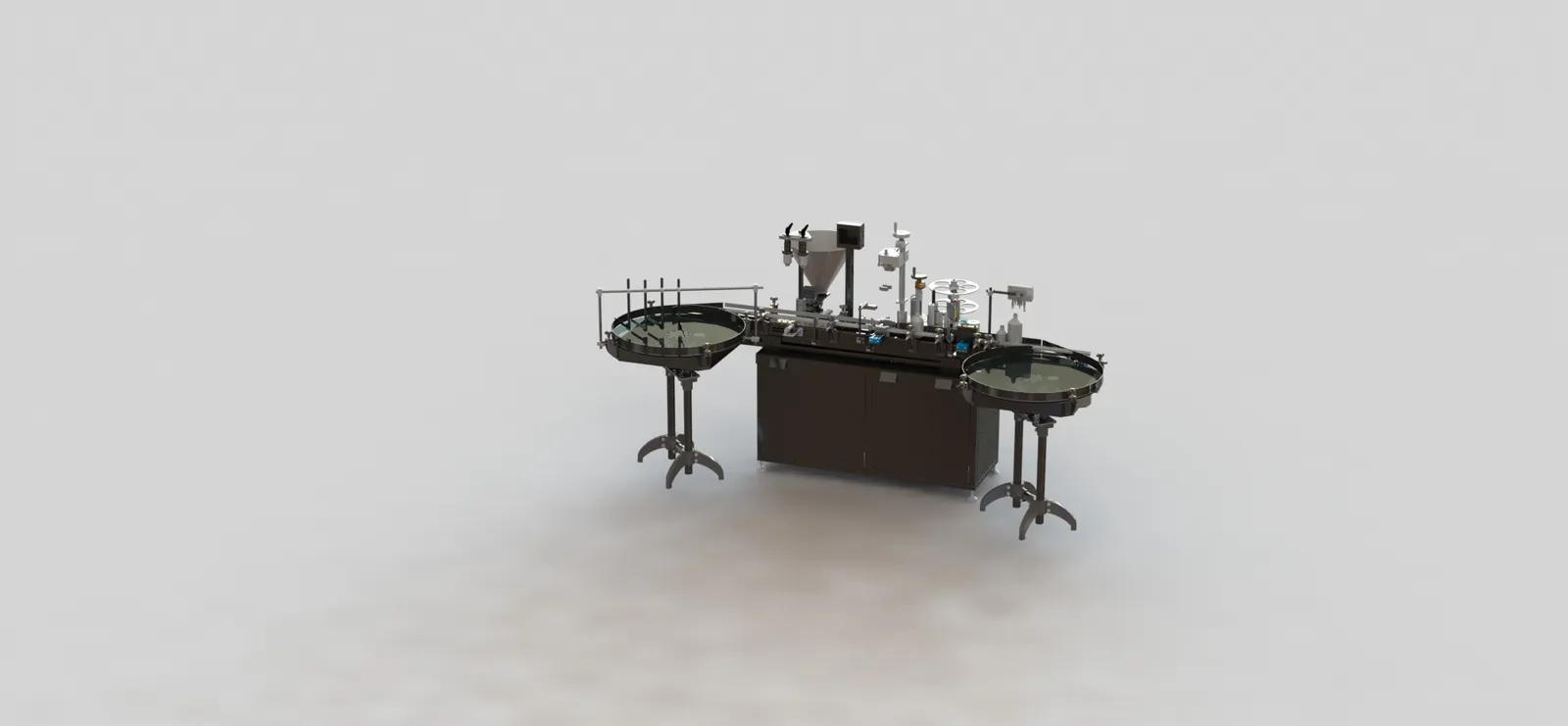
The machine combines filling, capping and — on the RVE2 version — labelling on a single frame. Each station is configured to the nature of the product during the preliminary audit. The cycle runs in 4 steps:
- Container placement by the operator under the dosing station
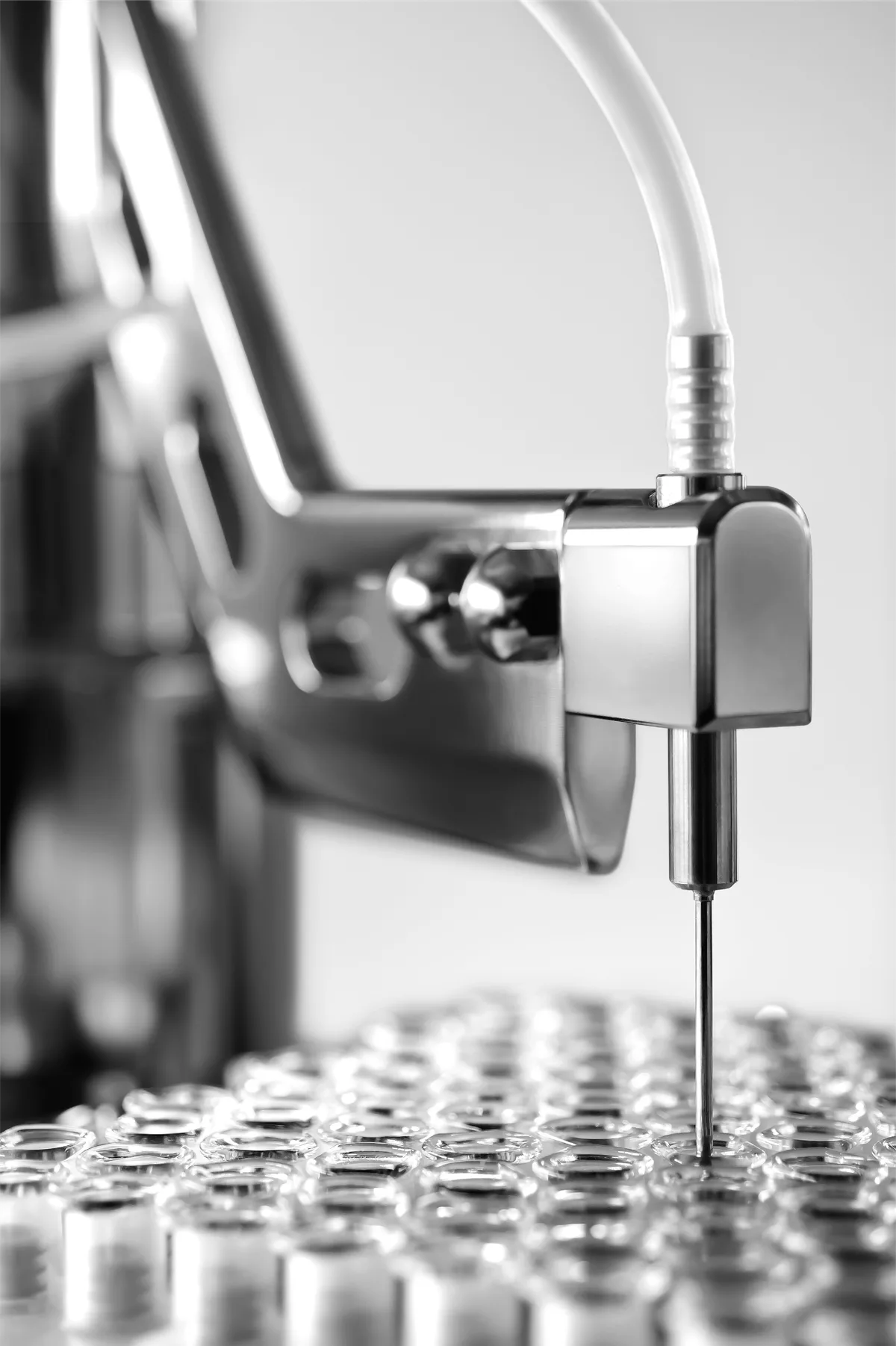
- Dosing by volumetric doser or flow meter, with nozzles designed to cut the product cleanly at the end of the stroke
- Cap placing and screwing by torque-controlled electric capper, or capsule crimping
- Wrap-around labelling on the same unit, on the RVE2 version
- Up to 1,500 bottles/hour, supervised by a single operator
- Filling, capping and — on RVE2 — labelling on a single compact frame
- Volumetric or flow-meter dosing, accuracy under 1%
- Drip-free nozzles: clean cut-off at end of dose, no mess on the neck
- High-torque electric capper, with capping torque control
- Format changeover in 10 to 15 minutes, with no dedicated tooling
- Configurable for fluid, viscous, foaming or oily products
- Payback typically observed between 12 and 24 months
Technical specifications
- Throughput
- up to 1,500 bottles/hour
- Handled containers
- bottles and jars, liquid and semi-liquid products
- Dosing technologies
- volumetric doser or flow meter, weight-based version available
- Dosing accuracy
- < 1%
- Capping
- high-torque electric capper with torque control, or capsule crimping
- Labelling
- wrap-around, built into the RVE2 version
- Format changeover
- 10 to 15 min by an experienced operator, no dedicated tooling
- Cleaning
- CIP available as an option for rinsing between references
- Difficult-product options
- anti-foam devices and bottom-up filling for foaming products
- Direct product-contact materials
- 316L stainless steel, materials compatible with corrosive and solvent-based products
Compliance
- Machinery Directive 2006/42/EC
- CE marking (Machinery, EMC, Low Voltage)
- Design compliant with GMP
- 316L stainless steel product-contact parts, PTFE seals
- Material and food-safety certificates (316L / 304)
- FAT/SAT documentation + "as-built" file
- Designed and manufactured in France
Typical use cases
- Cosmetics and perfumery: high-value serums and oils, where dosing accuracy avoids wasting expensive raw materials.
- Cosmetics: creams, body lotions and gels in pump bottles, including hot-poured products such as balms and thick masks.
- Pharmaceuticals: oral solutions, gels and eye drops in small runs, in QC labs, pilot units or low-volume GMP production.
- Chemicals: corrosive, solvent-based or flammable products, with CIP to avoid cross-contamination between references.
- Food and beverage: oils, sauces, condiments and liquid confectionery in small and medium runs, with food-contact materials.
Everything about this machine
Yes, and it is one of its strengths: it was designed for sites that change format several times in the same week. Adjusting the filling nozzles, the capper and the labelling station requires no dedicated tooling. An audit of your references is carried out beforehand to confirm compatibility and settle the options needed.
An experienced operator switches from format A to format B in 10 to 15 minutes, including a quick clean if there is no major product change. That is what makes the machine relevant for short runs chained through the day.
Yes, the configuration is tailored to the product. For viscous products, specific pumps and nozzles guarantee accurate dosing with no loss. For foaming products, anti-foam devices and bottom-up filling are available as options. Each configuration is settled during the product audit, before ordering.
Between 12 and 24 months depending on throughput and the number of manual stations replaced. A single operator supervises output that would need four to five people manually, with a consistency that a manual station cannot hold over time. The purchase cost stays well below that of an industrial automatic line.
The RVE is the standard version: filling and capping on a single frame. The RVE2 adds built-in wrap-around labelling, which allows filling, capping and labelling on the same unit with no transfer or extra handling. The RVE2 is the choice for sites wanting a complete, self-contained packaging station.
Our expertise enables us to offer a complete solution.
From technical expertise of your installations to the design of your future production tools.


.svg?dpl=dpl_BzHV8N4HnaEsTkA5krnhfPJ92Gf7)